The Checkout Lane That Vanished: One Michigan Town's Fight to Feed Itself
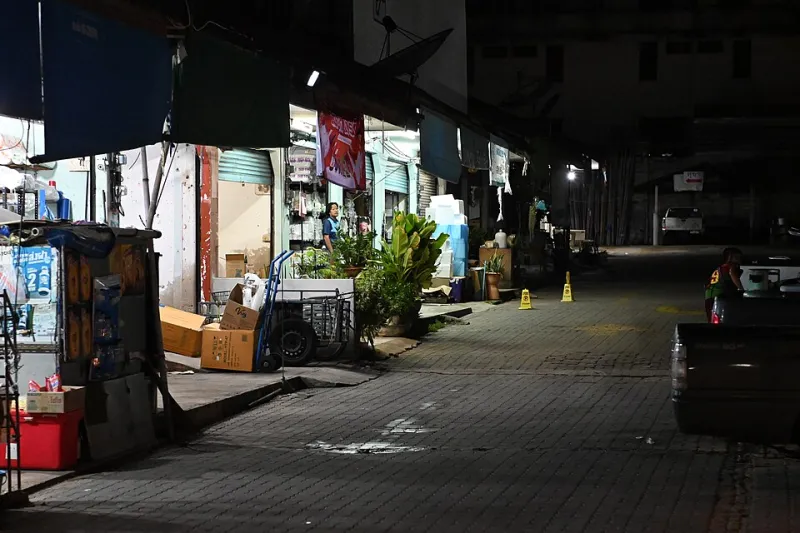
Photo: PattayaPatrol, CC BY-SA 4.0, via Wikimedia Commons
The produce aisle was the first thing to go bare. Then the dairy case shrank to a few plastic jugs. Within a year, the automatic doors at the only full-service grocery store in this Lake Huron-area town stopped opening at all, and a sign on the glass thanked shoppers for thirty years of loyalty.
For the 2,100 people who call this town home, the closure wasn't an inconvenience. It was a reorganization of daily life. A gallon of milk now demands a 22-mile round trip. For the quarter of residents without reliable transportation — seniors on fixed incomes, families sharing one car, workers on night shifts — it demands a favor, a bus schedule that doesn't exist, or a going-without.
Michigan has more communities like this one than most of us care to count. Food-access researchers estimate that more than one million residents of this state live in neighborhoods or townships classified as low-income and low-access, and rural Michigan carries a disproportionate share of that burden. When a corporate grocer recalculates its margins and pulls out, an entire local economy loses load-bearing wall.
What a Grocery Store Actually Does for a Town
It's easy to think of a supermarket as just another business. Talk to the people who lost one, and you learn otherwise.
The pharmacy that shared the parking lot saw foot traffic fall. The dollar store that moved in stocked shelf-stable food but nothing fresh, which meant residents were spending the same money on worse nutrition. The school district, already stretched, found itself expanding a weekend backpack program because kids who used to walk to the store for a snack were coming to Monday hungrier.
And there is the quieter arithmetic: every grocery dollar that once stayed in town — as wages for a checker, a butcher, a stocker — now leaves for a bigger store in a bigger town, along with the gas money to get there. Local economists call it retail leakage. Families call it making ends meet at a distance.
The Coalition That Refused to Accept the Map
What happened next in this town is the reason K. Henry tells this story. Rather than waiting for a chain to change its mind, a group of residents — a retired schoolteacher, a farmer with surplus sweet corn, a church secretary with a gift for organizing — spent eighteen months building what is now a community-owned grocery co-op.
They sold memberships at $100 a share to more than 400 households. They secured a federal rural-development loan guarantee, a modest grant from a regional foundation, and a lease — not of the old big-box site, but of the shuttered elementary annex, which the district sold at a discount. The store that opened its doors last spring is not fancy. It has eleven employees, a produce section sourced from four farms within thirty miles, and a meat counter run by a man who apprenticed at the old store three decades ago.
It is also, by every early measure, holding. Members shop with a loyalty discount. The co-op accepts SNAP and Double Up Food Bucks, stretching federal nutrition dollars for local produce. And the board meets in public every month, which means the community that owns the store can question the people who run it.
Why the State Should Not Leave This to Luck
Here is the uncomfortable truth: for every town that mounts an eighteen-month volunteer campaign, a dozen others simply go without. The co-op model works, but it shouldn't require a retired teacher's persistence to keep a community fed. That is a policy failure, and policy is where Lansing comes in.
K. Henry's Families First agenda includes a Rural Food Retail Initiative built on three planks:
1. Grocery Development Grants and Loan Guarantees. A dedicated state fund, administered through the Department of Agriculture and Rural Development, to underwrite the startup costs — refrigeration, buildout, working capital — for independent grocers and community co-ops in townships without a full-service store. The federal programs exist but are oversubscribed and slow; Michigan should bridge the gap.
2. Food Access Tax Credits for Host Communities. Communities that lease or sell vacant public buildings to food retailers at below-market rates should receive a credit against their state shared revenue — turning empty school annexes and shuttered storefronts into an asset in the fight against food deserts.
3. Infrastructure for the Last Mile. A store does no good if the bus never comes. The initiative would fund demand-response transit connections between underserved townships and the grocery access points that serve them, in coordination with county transit authorities.
The fiscal note is modest. The return — in local jobs, in health outcomes, in the simple dignity of buying your own groceries in your own town — is not.
A Test of Whom the Economy Is For
Every economic debate in Lansing eventually reduces to a question: is the economy built for the people who live in it, or for the spreadsheets of people who don't? A corporate grocer's decision to close was rational on a spreadsheet. The town's decision to organize was rational on a different ledger — the one that counts neighbors, nutrition, and whether a community can sustain itself.
K. Henry believes state government's job is to make sure the second ledger wins more often. Michigan's families don't need sympathy when the checkout lane vanishes. They need a state that treats grocery access as the infrastructure it is — as fundamental as roads, as non-negotiable as schools.
The people of one Lake Huron town proved what's possible when they take matters into their own hands. Lansing's job is to make sure they never have to do it alone.