Signed in Water: The Promise Lansing Keeps Breaking Every Time a Rate Hike Clears
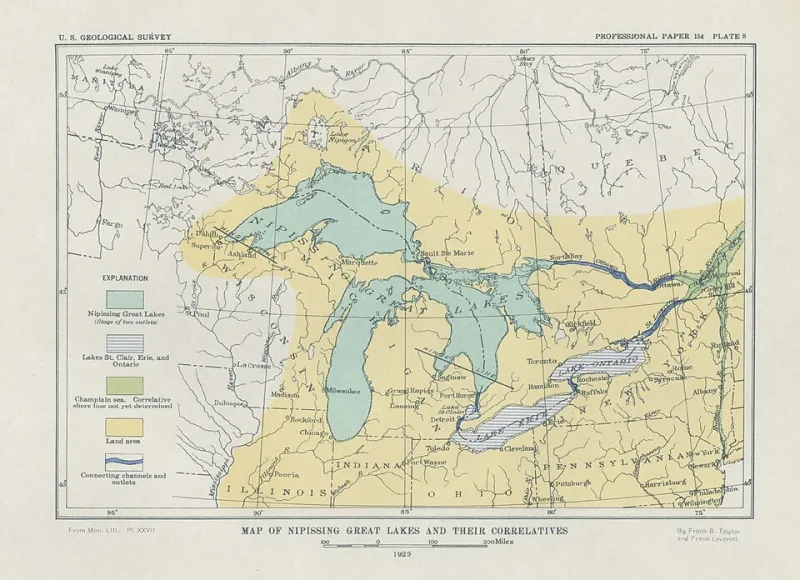
Photo: Frank Leverett, Public domain, via Wikimedia Commons
In Michigan, water is not an abstraction. It is the memory of a grandparent's cottage on Lake Huron, the reason a foundry opened in Flint, the summer job lifeguarding at a municipal pool in Muskegon. We are surrounded by a fifth of the world's fresh surface water, and yet too many Michigan families open their utility bills with the same dread they reserve for medical statements.
That contradiction is not fate. It is a choice — made slowly, budget by budget, by a Lansing that has treated water as a technical matter for engineers and rate boards rather than the family issue it truly is. K. Henry's Great Lakes Clause is a proposal to end that era.
What Deferral Actually Costs a Household
When a legislature postpones pipe replacement, the invoice does not disappear. It migrates. It lands on the landlord who passes costs to a tenant in Grand Rapids, on the retiree in Bay City whose fixed income absorbs another surcharge, on the young family in Warren that must choose between a water payment and a car repair — the difference between getting to work and losing a job.
Deferred maintenance is a regressive tax levied in installments. The households least able to absorb it pay first and pay most, because rate structures rarely distinguish between a corporate campus and a kitchen table. Meanwhile, shutoffs convert a billing dispute into a public health emergency: children miss school, hygiene suffers, and families are forced to make the kind of calculations no parent should face in the richest water state in the nation.
The Flint crisis taught us what happens when water decisions are made without the people who drink the water. The lesson was never only about pipes. It was about posture — the habit of governing that treats residents as recipients of decisions rather than parties to a promise.
The Great Lakes Clause, in Plain Terms
K. Henry's proposal is deliberately simple, because families deserve policy they can read at the dinner table. It has three parts.
First, a Family-Impact Review before any rate increase. No municipal water system or approved rate hike in Michigan would take effect without a published analysis answering three questions in plain language: How many households would face shutoff risk at this rate? What is the burden on a family earning the local median income? What alternatives — efficiency grants, assistance funds, phased capital plans — were considered before asking residents to pay more? The review would be posted publicly, not filed away.
Second, a hard floor of affordability. Water service is a necessity, not a luxury good. The Clause establishes a statewide standard that no household at or below a defined income threshold pays more than an affordable percentage of income for basic water and sewer service, with state matching funds to ensure local systems are made whole. Communities should not be forced to choose between solvent utilities and protected families.
Third, honest accounting for infrastructure. Every water system in the state would maintain a public, plain-language ledger of deferred maintenance — what it is, what it will cost, and what it will cost if we wait another decade. Sunlight here is not symbolic. It converts an invisible liability into a budgeting priority, and it gives Lansing nowhere to hide when the next pipe fails.
Why This Belongs in the Families First Agenda
Some will call this an environmental bill. Others will call it a utility regulation. K. Henry calls it what it is: a family economic policy. Nothing in a household budget is less negotiable than water. A family can postpone a vacation, downgrade a phone plan, or skip a restaurant. They cannot postpone hydration, sanitation, and the health of their children.
That is why the Great Lakes Clause fits the campaign's core test: does a policy make life more stable, more affordable, and more dignified for the people raising the next generation of Michiganders? A state that surrounds its families with the Great Lakes has no excuse for letting any child brush their teeth with bottled water because the tap was shut off over a bill.
A Promise Worth Signing
There is a reason we speak of promises in the language of ink and signatures. Promises are meant to bind, to outlast convenience, to hold even when the political weather changes. The Great Lakes Clause would put water affordability in that category — not subject to the whims of a rate cycle, but guaranteed as a matter of Michigan principle.
We are, after all, the state that taught the nation what happens when water is neglected, and what becomes possible when residents refuse to be ignored. The next chapter should be written in the opposite spirit: with rate reviews that respect the family budget, infrastructure ledgers that respect the truth, and a Lansing that finally treats every water bill as what it really is — a document signed against the trust of the people it serves.
Clean water at a fair price is not too much to ask of the state that holds one-fifth of the world's fresh water. It is the minimum a family promise requires.