The Lifeguard's Question: A Yardstick for Every Bill That Crosses the Capitol Steps
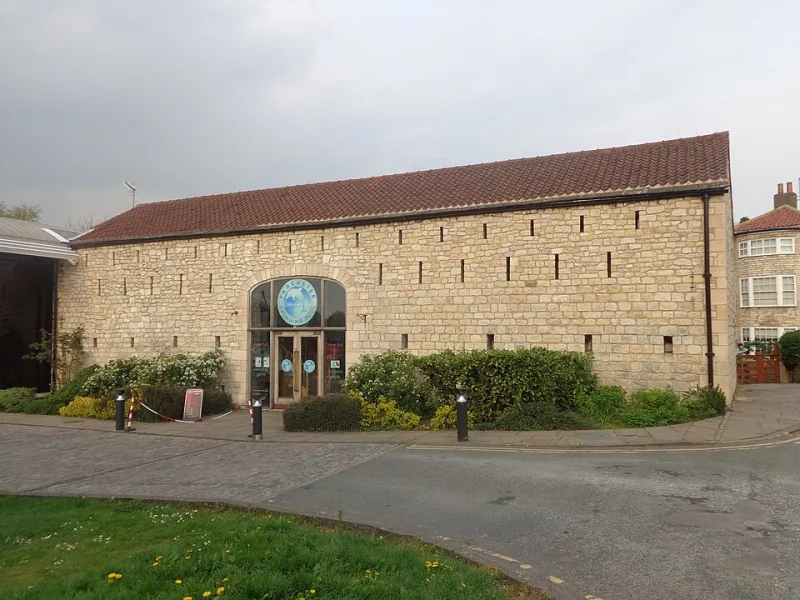
Photo: Mtaylor848, CC BY-SA 4.0, via Wikimedia Commons
Every August, before the pools close and the school buses start their routes again, I try to spend an afternoon at a community pool somewhere in this state. Not for the exercise, and not for the campaign photos — though I will admit the company is hard to beat. I go because a town pool is the most honest building in Michigan.
Nobody pretends at the pool. The lifeguard knows exactly how many kids showed up. The recreation director knows exactly how many dollars are left in the budget. And every parent on the bleachers knows exactly what happens if the millage fails or the state check never arrives: the gates stay shut, and the kids find something else to do — and not all of it is good.
That is why, when I evaluate any piece of legislation that crosses my desk, I apply what our campaign calls the Rec Center Test. It is not a clever slogan. It is a single question that cuts through a decade of legislative jargon:
If this bill becomes law, will it help the local pool, library, or rec league keep its doors open — or not?
If the answer is no, the bill has to explain itself. And most of them can't.
What the Test Actually Measures
The Rec Center Test is not really about swimming. It is about whether state government understands that families experience policy at the level of their neighborhood, not their legislative district. A tax credit that shows up in February does nothing for the recreation director deciding in May whether she can afford certified lifeguards in June.
The test asks three things of every bill:
- Does it direct real resources to the local level — shared revenue, recreation millage support, library funding, youth program grants — or does it simply reshuffle money above the town's head?
- Does it reduce the cost burden on working households in a way those households can feel before the next election cycle, not the next decade?
- Does it treat small-town and urban Michigan alike, or does it quietly assume that families in Detroit, Dearborn, and Dollarville want different things?
Families in all three places want the same thing: a safe place for their kids in the summer and a fair shot in the fall. Any bill that cannot demonstrate progress toward that — in plain terms — has not earned the name "reform."
Three Towns, Three Pending Bills
This summer, we took the test on the road and applied it to legislation actually pending in Lansing. Here is what we found.
In Sault Ste. Marie, the community pool operates on a budget thinner than a pool noodle, and the recreation department has cut its swim lesson program twice in five years. Meanwhile, the Legislature is weighing another round of targeted business incentives modeled on the same approach that has underdelivered across two decades. Run the Rec Center Test: those incentives may or may not produce jobs, but nothing in the current drafts guarantees a single dollar reaches the pool deck by next summer. A bill that cannot promise a swim lesson in Sault Ste. Marie has not yet made its case to the families who live there.
In Battle Creek, the public library anchors a block that has seen better decades, and its summer reading program doubles as free childcare for hundreds of working parents. Pending legislation to expand broadband access — genuinely important work — would score well on the test if the final version includes the local infrastructure cost-sharing that rural and small-city libraries have requested. As drafted, the burden of last-mile connections falls on municipalities with the least capacity to carry it. The test does not kill the bill. It tells you exactly which amendment to fight for.
In River Rouge, the rec league that has produced generations of football players shares its field with a drainage problem the city cannot afford to fix. A pending stormwater and infrastructure package would, on its face, pass the test — new money for local water systems. But the funding formula in the current draft weights per-mile infrastructure costs in a way that favors sprawling suburbs over older, denser river towns. Same bill, same good intentions — and a formula tweak away from actually helping the people it names in its title.
Notice what the test does. It does not demand that every bill be a recreation bill. It demands that every bill remember the recreation director, the librarian, the volunteer coach — the people holding together the civic infrastructure that no state agency can replace.
A Shorthand for the Voter
Here is why I am writing this down: because legislative analysis was never meant to be a specialist's hobby. When a candidate for the House or Senate comes to your door this fall, you should not need a policy briefing to evaluate them. You need one question.
Ask them about the last bill they supported — any bill — and then ask whether it would keep your pool open, your library staffed, your rec league affordable. Watch what happens. Some will give you a genuine answer about local revenue sharing and shared priorities. Others will give you a paragraph about economic climate that could have been written by anyone, about anything.
The Rec Center Test is not a substitute for detailed policy work — we publish plenty of that elsewhere on this site, and I would welcome your scrutiny of every line. But it is a key. It opens the door to a conversation that Lansing has spent too long making complicated on purpose.
Government earns trust the way a pool earns its crowd: by opening on time, keeping the water clean, and charging a price families can pay. Every bill that reaches the Capitol steps should be able to say the same. I intend to vote as if the lifeguard is watching — because she is, and so are the kids in her charge.