When the Siren Takes Nine Minutes: The Volunteer Shortage Hitting Every Michigan Kitchen Table
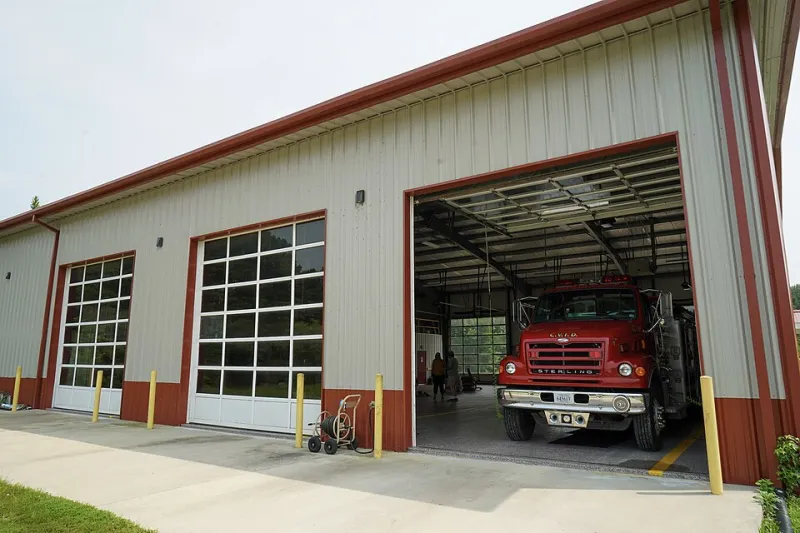
Photo: USDAgov, Public domain, via Wikimedia Commons
The call came in at 6:12 on a Tuesday evening in October — a stove fire, contained to a kitchen, in a township of about 1,400 people. The first page went out to eleven names on a volunteer roster. Three responded. Two were already at work more than thirty minutes away.
The truck rolled at 6:21. Nine minutes. The kitchen was a loss, the house was not, and everyone involved will tell you it was a good outcome. They will also tell you, if you ask a second time, that nine minutes is four minutes longer than it was a decade ago, and that on a weekday afternoon the number can be worse.
Reading a Call Log Like a Budget Document
A fire hall's call log is the most honest planning document a township produces. It records time of dispatch, time of arrival, number of responding personnel, and mutual aid requested. Read enough of them and patterns emerge: weekday daytime is the weakest window; summer weeknights are the strongest; winter storms stretch arrival times across the board.
What the log cannot show is why. The why is a demographic fact that Michigan shares with most of rural America. The volunteer who used to work ten minutes from the hall now commutes forty. The farm family that staffed a generation of rosters has aged out. The employer who once let a trained responder leave mid-shift has been replaced by a chain with a corporate attendance policy.
Statewide, the trend is not subtle. Departments that once ran on fifty volunteers now run on a dozen, and a growing share of Michigan's fire and EMS coverage depends on paid-on-call personnel who hold other full-time jobs. The roster did not disappear. It thinned, quietly, one retirement at a time.
The Cost Shows Up on Your Insurance Statement
Here is the part that reaches households with no connection to a fire department at all.
Insurers rate communities using a national schedule that weighs, among other things, staffing, apparatus, water supply, and — critically — the distance between a station and the properties it protects. Departments that lose staffing and equipment capacity can see their rating slip, and a slipping rating becomes a premium increase spread across every policyholder in the district.
Residents of a shrinking rural district frequently pay more for homeowners insurance than residents of a city with a full-time department and comparable home values. They are paying for a service gap in monthly installments, and most of them have never been told that is what they are paying for.
Add the second-order effects. A business considering a location will look at ISO ratings and response times before it looks at the tax abatement. A young family comparing two towns is quietly comparing emergency response whether or not they know it. The volunteer shortage is not only a safety story. It is a household budget story and an economic development story, and it is being filed under "rural issue" by people who have not done the arithmetic.
What Families Are Already Doing About It
In the absence of a state strategy, neighbors are covering for each other, and they are doing it at real personal cost.
There are the paid-on-call responders who leave a shift at the plant and answer a page at 2 a.m., then clock back in at 6. There are the spouses who run the hall's fundraising fish fry because the auxiliary account pays for equipment the township budget will not. There are the township boards that have voted to consolidate dispatch or sign a mutual aid agreement three counties wide because the alternative was a coverage gap on Sunday afternoons.
This is admirable and it is not sustainable. Volunteerism is a renewable resource only if the institution around it is renewed. What Michigan has done for two decades is ask harder and harder things of fewer and fewer people and call the result tradition.
Three Commitments That Would Actually Move the Number
Training stipends, paid to the responder. Michigan requires substantial initial training for structural firefighting and EMS certification, and that training costs both tuition and unpaid hours. A modest state stipend — paid directly to the individual, not to the department — converts a volunteer commitment from a second job into a supported civic role. It would also help retention more than recruitment, which is where departments actually lose ground.
Regional equipment sharing with state backing. A single rural department cannot justify a ladder truck it uses six times a year, and it should not have to. Regional apparatus pools, with state matching funds and clear deployment agreements, let several counties share the capital costs that are currently crushing single-township budgets. The equipment exists. The coordination does not.
A school-to-cadet pipeline. Michigan's career and technical education system already runs public safety programs in dozens of districts. Connecting those programs to live cadet positions in local departments — with liability protections, supervision standards, and a clear credential path — gives young people a route into a paid-on-call role at eighteen and a career at twenty. Several states have built versions of this. There is no reason Michigan cannot.
Why This Is Not a Rural Issue
It is tempting for voters in Grand Rapids or Ann Arbor to read a story about a township fire hall and file it away as someone else's problem.
But mutual aid runs both directions. Suburban departments back up rural ones and rural ones back up suburban ones during structure fires, hazmat incidents, and weather events. When a regional roster thins, the gap travels. And the insurance rating logic that penalizes a rural district does not stop at a county line — it applies to any community where staffing and response time deteriorate.
Emergency response is the oldest thing government promises. It is the promise that if your house is on fire at 6:12 on a Tuesday, someone is coming. Michigan can keep making that promise on the strength of a shrinking roster of generous people, or it can decide that a promise worth making is worth funding.
Nine minutes is the number on one hall's log tonight. It does not have to be the number we hand to the next generation.