The Calendar Is the Cover: A Daylight Rule for Lansing's Year-End Session
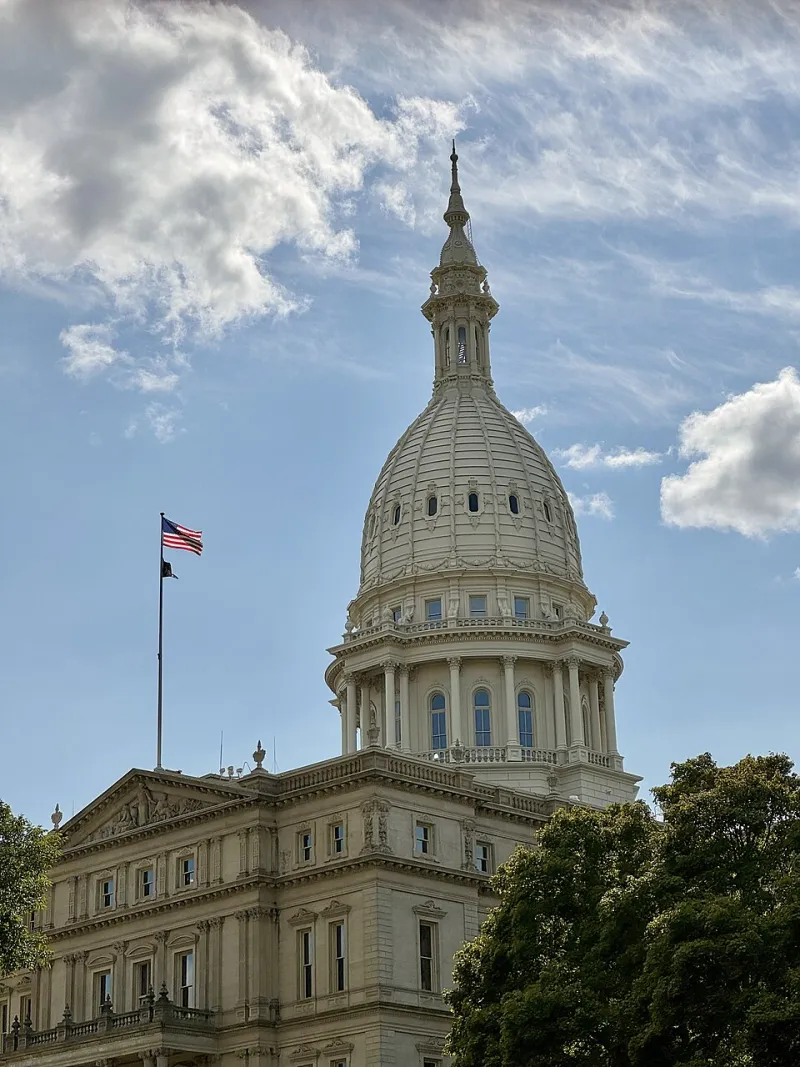
Photo: w_lemay, CC BY-SA 2.0, via Wikimedia Commons
There is a reason the Michigan Capitol feels different after Thanksgiving in an election year. The chamber lights stay on later, the hearing schedules tighten, and bills that seemed dormant in October suddenly acquire momentum in December. Some of that work is routine. Some of it is necessary. But the post-election session — the lame-duck period before newly elected members are seated in January — has a structural problem that no amount of good intentions can wave away: the calendar itself becomes a cover.
The Calendar Is Not Neutral
When lawmakers who will not return in January vote on major policy, the public loses more than a familiar name on a committee roster. It loses the ordinary rhythm of accountability. New members have not yet taken the oath. Constituents are focused on the holidays, on school breaks, on the heating bill and the travel schedule. Hearings get compressed. Amendments appear late. Conference committees reconcile differences in rooms that are hard to find and harder to watch.
None of this requires a conspiracy. It requires only a deadline. A bill introduced in late November can be voted out of committee in early December, amended on the floor, sent back across the rotunda, and enrolled before families have had time to read the summary. The people most affected — parents, workers, small-business owners, local officials — are often the last to know. That is not a theory about bad actors. It is a description of what happens when the legislative calendar is allowed to outrun public understanding.
What Travels in a Year-End Package
Year-end packages are rarely single-subject bills. They are vehicles. A budget transfer may carry a policy rider. An administrative fix may carry a preemption of local authority. A tax adjustment may carry a change in eligibility rules that no one debated on its own merits. In Michigan, as in every state, the end-of-year crush creates a particular risk: provisions that could not survive a standalone hearing get folded into must-pass legislation and voted on as a bundle.
The categories are familiar. Tax policy can shift in a conference report. Environmental permits and oversight rules can move through an appropriations bill. Election administration can be changed in a technical amendment. Criminal justice provisions can appear in a package described as a funding measure. Insurance rules, licensing standards, and local government authority can all travel under the same wrapping paper. Each provision may have a defender. That is not the point. The point is that the public should be able to see each one, read it, and know who voted for it.
The Daylight Rule
K. Henry has proposed a simple standard for the post-election session: 72 hours of public review, a recorded vote, and no sweeping policy changes after Thanksgiving.
The first part is not a technicality. Seventy-two hours gives residents, local newspapers, advocacy organizations, and ordinary taxpayers enough time to read a bill before it becomes law. It gives a school board or a township supervisor time to understand what a preemption clause would do. It gives a family time to call a legislator. It does not guarantee that every person will read every page. It guarantees that the opportunity exists.
The second part matters because accountability should be attached to names. A voice vote on a complex package in the final hours of session tells the public almost nothing. A recorded vote tells them exactly who chose to move the bill and who chose to stop it. That is not an insult to legislators. It is a basic condition of representative government.
The third part is the guardrail. If a proposal is significant enough to reshape tax policy, override local decisions, change election rules, or alter a major public system, it should not be rushed through after Thanksgiving simply because the calendar is running out. It can wait for the new session. It can be introduced, heard, and debated by the members who will actually be accountable for it in the years ahead. The holidays are not a reason to lower the standard. They are a reason to raise it.
A Test for the New Year
Michigan families should not have to choose between participating in public life and preparing for the winter. They should not have to learn about a major policy change from a late-night news alert while the tree is still up. The legislature can do its routine work and still respect the public's right to see it. It can pass a budget and still allow amendments to be read. It can finish its business without turning the final weeks into a test of who can stay awake longest.
The daylight rule is not an attack on the institution. It is a request that the institution act like the public is watching — because the public should be. When the gavel falls in December, the question should not be what slipped through. It should be what was seen, what was read, and who was willing to put their name on it.