What the Deer Camp Knows: Opening Day and the Future of Rural Michigan
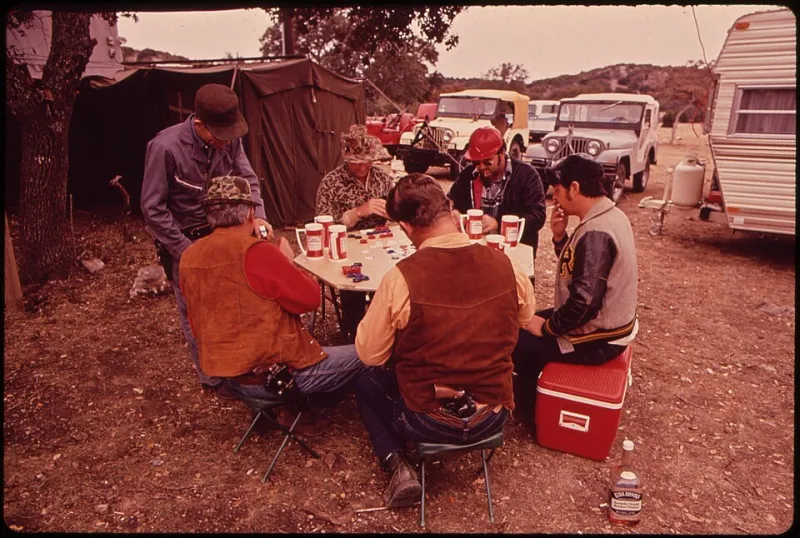
Photo: Marc St. Gil, Public domain, via Wikimedia Commons
The season does not really begin at first light. It begins the night before, in a camp kitchen that smells of coffee, kerosene, and last year's wood smoke, where four generations of one family argue about the same stand locations they have argued about since the Reagan administration. Somebody's grandson has driven up from Grand Rapids with a job interview on Monday and a borrowed rifle in the truck. Somebody's daughter is the one who actually owns the land now, and the paperwork in the glovebox says so.
Firearm deer season opened this morning across Michigan. In Lansing, the date is a line on a calendar and a revenue projection. In the northern two-thirds of this state, it is closer to a census — a yearly accounting of who is still here, who has left, and what it would take to bring them back.
An Economy Measured in Coffee and Diesel
Drive any two-lane highway north of Clare on opening weekend and the receipts tell a story that spreadsheets rarely capture. The gas station that sells more coffee in three days than in the previous three weeks. The diner that hires back two retirees for the rush. The hardware store that moves orange hats, hand warmers, and trail cameras off a shelf that sits half-empty most of the year. The veterinary clinic that stays open for a dog that met a porcupine.
This is not nostalgia. It is payroll. For a great many small communities, the two weeks around the opener are a load-bearing wall in the local economy, arriving at precisely the moment when seasonal work dries up and heating bills arrive. Any serious conversation about rural prosperity in Michigan that does not account for hunting, fishing, and the outdoor economy is a conversation being held with one eye closed.
The Question Every Camp Is Asking
Sit at enough of these tables and the same question surfaces, usually after the dishes are cleared. Where did everybody go?
License participation has trended in the wrong direction for years, and the camps feel it before the agencies measure it. The reasons the hunters themselves offer are rarely mysterious. The kids who used to spend opening weekend in a blind are now finishing degrees three hours south and taking jobs that do not exist back home. The family parcel got divided, or sold, or leased to an outfitter from another state. The cost of a nonresident tag, a decent used truck, and a week off work is no longer a rounding error for a young household. And the public land is there, but the parking lot fills by 4 a.m. and the walk in gets longer every season.
What strikes me most is that nobody in these camps is asking for sympathy. They are asking for a state government that behaves as though rural Michigan is a place where people live, not a place where people visit.
Land, Access, and the Price of a Place to Hunt
Access is the quiet fault line running beneath all of it. Michigan is blessed with millions of acres of public land, and those acres are a genuine inheritance worth defending. But access is also a question of who can afford to live near it. When out-of-state capital buys up working forest and leases it back at prices a local family cannot match, the tradition does not end with a headline. It ends slowly, one camp at a time, with a note on a plywood wall that says the land has changed hands.
That is a policy question, and it deserves a policy answer. It means taking seriously the tools we already have — hunter access programs, forest stewardship incentives, and conservation easements — and asking whether they are actually reaching the families who have hunted these ridges for a century. It means treating land access as infrastructure, in the same category as a bridge or a broadband line, rather than as a private hobby.
The Things the Camps Ask For
When the conversation turns to what would help, the answers are unglamorous and specific. Reliable internet, so a grown child can work remotely from a family parcel instead of commuting to a city. A property tax system that does not punish a family for holding onto land across generations. A school that stays open. A clinic within forty minutes. A road that gets plowed before Thursday.
These are the fundamentals of the Families First Agenda, and they look different in the Upper Peninsula than they do in a Detroit neighborhood — but they are the same demand. People want to be able to stay. They want their children to have a reason to come home that is not Thanksgiving.
A Listening Tour, Not a Photo Op
Every four years, candidates discover rural Michigan in October, stand in front of a barn, and promise to fight for the outdoorsman. Then the cameras leave and the appropriations process does what it always does.
I am less interested in the photograph than in the follow-through. That is why this campaign has been built around county-by-county conversations rather than press releases — eighty-three counties, and a notebook that gets fuller every week.
The deer camp is not a constituency to be flattered once a season. It is one of the last institutions in rural Michigan where people of different politics, different incomes, and different generations sit at the same table and solve problems by consensus. That is a form of governance we could stand to study.
Opening weekend is a serious civic moment. It deserves to be treated as one — this year, and every year after.