Signed, and Showed the Work: Why Every Endorsement We Accept Gets a Paper Trail
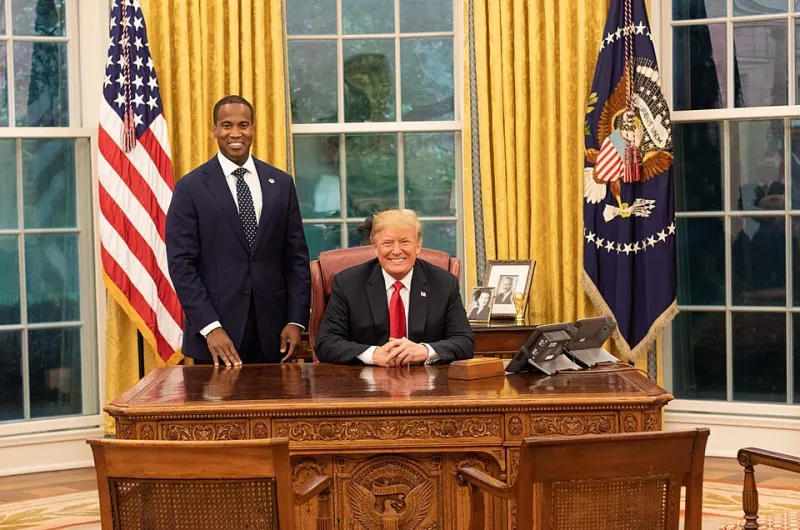
Photo: Donald Trump, Public domain, via Wikimedia Commons
There is a familiar ritual in Michigan politics. A labor council, a conservation group, a mayor, a county sheriff's association — one by one they line up behind a candidate, and one by one their names become a strip of small-font logos across the bottom of a website. The logos are meant to do work that words are supposed to do. They are meant to say: people who know things trust this person, and therefore you should too.
That shorthand is not dishonest in itself. But it is incomplete, and incompleteness is where voters get quietly misled. A logo does not tell you what the endorsing body actually asked for. It does not tell you whether the group reviewed a platform or simply shook a hand at a county dinner. It does not tell you whether a financial relationship exists. And it never tells you what the candidate promised in exchange — or refused to promise.
So this campaign is going to publish an endorsement ledger. Every endorsement we accept will be recorded twice: once as an announcement, and once as a receipt.
The Question Behind the Logo
When a voter sees a coalition of eleven organizations arrayed beneath a candidate's name, the honest question is not "are these good groups?" The honest question is "what does each of them think they bought?"
In most campaigns, nobody asks. The endorsement is treated as a gift, and gifts come with obligations that are never written down. Sometimes those obligations are benign — a group wants a meeting in January, a seat at the table on a bill. Sometimes they are not: a pledge to carry a specific piece of legislation, a promise to bury a report, an understanding that a certain appointment will go a certain way.
None of that has to be sinister to be worth disclosing. It only has to be real. Voters are entitled to know the shape of the arrangement before they hand over their vote, not after the session ends.
What We Ask Before We Accept
Every organization that approaches this campaign receives the same five questions, in writing. Their answers become part of the public record.
One: Who are you, and who speaks for you? An organization is not a monolith. A board vote, a member referendum, and a single officer's enthusiasm are three different things, and we will say which one produced the endorsement.
Two: What did you ask of us? Precisely. Not the general sentiment — the asks. A meeting, a vote, a line in a budget, a public appearance.
Three: Which parts of our platform did you actually read? We publish our positions in full. An endorsement that rests on one plank is a narrow endorsement, and we will describe it that way rather than let it float into the general glow.
Four: Is there any financial relationship — contract, grant, retainer, donation, or family tie — between your organization's leadership and this campaign or my household? If so, we say so.
Five: What will you expect if we win — and what will we tell you if the answer is no? This is the question that separates an endorsement from a purchase. We want the answer in writing, because we intend to publish our response alongside it.
What an Endorsement Does Not Mean
Here is the part the logos never say.
An endorsement does not mean this campaign adopts the endorsing organization's entire platform. It does not mean I will vote a particular way on a bill I have not read. It does not mean the group has veto power over a hiring decision, a contract, or a budget line. It does not mean the group speaks for every one of its members, and it certainly does not mean those members agree with me on anything beyond the narrow ground on which the endorsement stands.
Where we differ with an endorsing body — and we will differ, sometimes sharply — the ledger will say so in the same entry, in plain language, without spin.
A Receipt Any Campaign Can Copy
We are not asking voters to trust our discretion. We are asking them to check a template. Any campaign in Michigan can adopt this in an afternoon:
Endorsement record — [Organization name] Date requested: [ ] | Date answered: [ ] Deciding body and vote: [board / membership / officer] What they asked of the campaign: [ ] What we committed to: [ ] What we declined: [ ] Platform planks reviewed: [ ] Financial or family relationships disclosed: [ ] Points of disagreement: [ ] Full correspondence attached: [yes / no]
That last line matters most. "Full correspondence attached" converts a marketing claim into evidence. A voter who wants to know whether an endorsement was earned over months of conversation or granted in a single phone call can simply look.
Why the Fine Print Is the Story
Michigan families are asked to make consequential judgments on thin information. They are handed a glossy mailer, a thirty-second ad, a wall of faces, and told to infer. Inference is expensive, and the people with the least time to do it — the parent working two shifts, the caregiver managing a household alone — are the ones most often asked to trust instead of verify.
A ledger is a small correction to that asymmetry. It does not make endorsements meaningless; it makes them legible. It says to every voter: here is the support we have, here is exactly what it cost, and here is what we told the people who offered it.
That is a lower-temperature politics than the one we are used to. It is also a more durable one. Trust that is documented does not have to be re-earned every news cycle — it can simply be read.
We will begin publishing the ledger as endorsements are finalized, and we will update it when things change, including when they change badly. If an endorsing organization and I part ways, the record will show it. If I decline a request, the record will show that too.
Show the work. That is the whole idea.