Freshman by Choice: K. Henry's Case for a Self-Imposed Sunset in Lansing
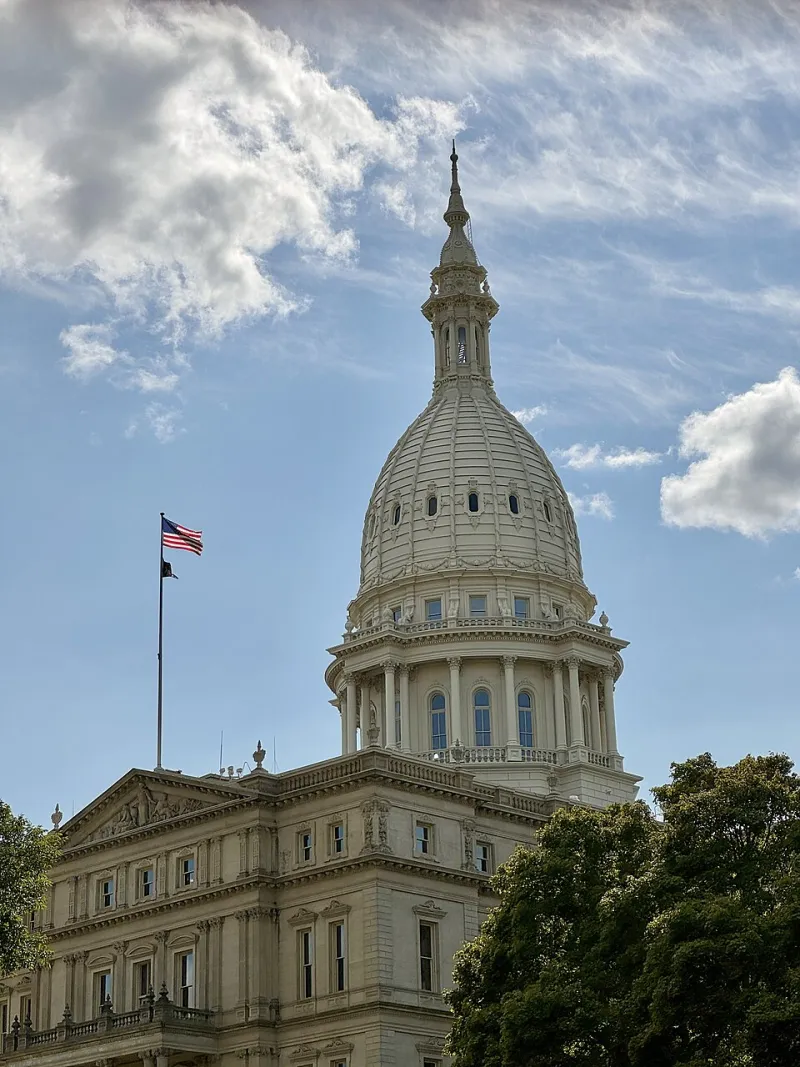
Photo: w_lemay, CC BY-SA 2.0, via Wikimedia Commons
There is a particular kind of longevity that accumulates in Lansing. It is not written into any statute, and it does not appear on any ballot. It shows up instead in the quiet mechanics of the Capitol: who chairs the committees, who gets the hearing slots, who knows which door to knock on when a bill needs a nudge before the session calendar runs out.
Michigan voters have been told for three decades that term limits solved the problem of the permanent politician. The evidence suggests otherwise. The building simply changed its architecture of power — and the people it serves have noticed.
The Math of a Professional Legislature
Michigan's legislative term limits, adopted by referendum in 1992, cap service in each chamber. On paper, the Capitol should be a revolving door. In practice, the average tenure of a state representative or senator still stretches well past what the framers of that reform envisioned, because officeholders simply migrate between chambers — House to Senate, Senate to countywide office, back again. A 2018 study commissioned by the Michigan Legislature found the state ranked among the lowest in the nation for legislative experience, while the influence of staff, lobbyists, and agency professionals grew to fill the vacuum. We traded the power of elected experience for the power of unelected experience.
Meanwhile, neighboring states tell a different story. Ohio and California both revisited their own limits after watching institutional memory evaporate. Minnesota and Wisconsin, which impose no limits at all, routinely produce legislatures with deeper policy expertise — and, notably, higher voter satisfaction with how their state governments function. The lesson is uncomfortable: term limits alone neither drain the swamp nor build the bench.
What they do produce is a Capitol where the elected officials rotate and the infrastructure of influence does not. Committee chairs rotate, but the people who draft the fine print stay. Fresh faces arrive every January, and the learning curve — the budget process, the appropriations subcommittees, the nuances of the School Aid Act — belongs to whoever has been in the room longest. Too often, that is not a legislator at all.
What Voters Actually Want
When we talk with families across the 83 counties, the frustration is never that legislators serve too long in the abstract. It is that service stops being accountable. A representative who has held a seat through four redistricting cycles answers to a map, not a neighborhood. A senator who treats a chamber seat as a waypoint to statewide office answers to ambition, not constituents.
Voters do not oppose experience. They oppose entrenchment. And entrenchment is not measured in years — it is measured in the disappearance of alternatives, the closing of the primary field, the quiet agreement that a seat belongs to a person rather than to the public.
A Different Kind of Pledge
This is why our campaign is doing something unusual: we are announcing a service limit before Election Day, not after. If honored with this seat, K. Henry will serve no more than three terms in the Michigan House of Representatives. That commitment is written into this campaign's founding documents, and we invite every candidate for state office — incumbent or challenger, any party — to adopt the same voluntary pledge.
A self-imposed sunset changes how a legislator governs. With no fourth term to chase, there is no reason to defer hard votes to a future campaign cycle. With a known final session, there is every reason to build successors rather than dependents — to mentor new members, publish the playbook, and leave the institution stronger than the individual. It converts the legislature from a career ladder back into what it was meant to be: a temporary public trust.
We are not calling for a repeal of Michigan's term limits, nor for their expansion, in this space. We are calling for something the law cannot supply: personal accountability, offered in advance and on the record.
The Standard We Ask of Others
Signing a voluntary service pledge is not a guarantee of wisdom, and we will not pretend it is. But it is a guarantee of something Lansing badly lacks — a legislator whose horizon matches the voter's, not the lobbyist's. It means every budget cycle is treated as if it matters on its own terms, because there is no next term in which to bank goodwill.
Michigan's families do not get term limits on their challenges. A layoff does not expire. A childcare waitlist does not rotate out. The road outside the house does not repair itself after two terms. The people sent to fix these things should arrive with the same urgency — and the humility of knowing that the seat was never theirs to keep.
We choose to run as a freshman with a finish line in sight. We ask our opponents, and every officeholder in this state, to tell voters the same thing: how long they intend to serve, and why. If the answer is 'as long as I can,' Michigan deserves a better one.