Government at the Doorstep: K. Henry's Case for Closing the Distance Between Lansing and Your Street
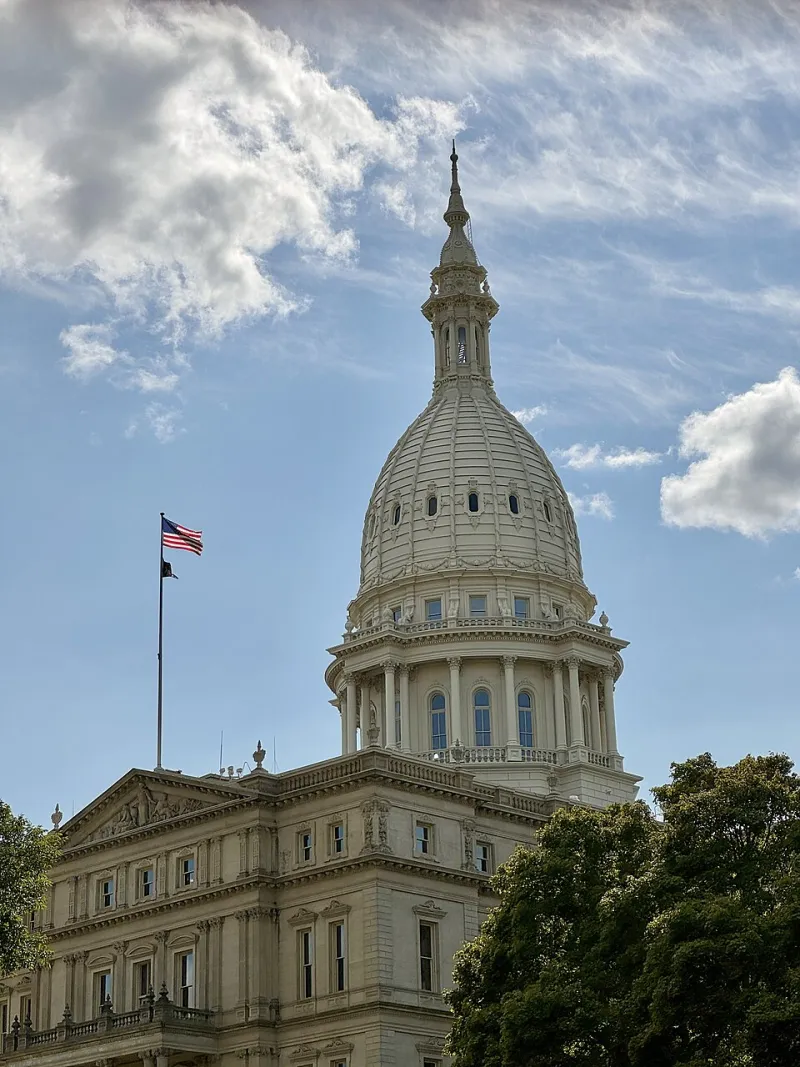
Photo: Michael Rivera, CC BY-SA 4.0, via Wikimedia Commons
There is a simple test I apply to any institution that claims to serve the public: how far do you have to travel to reach it?
For most Michigan families, the answer when it comes to state government is: too far. A question about a unemployment claim means a phone tree. A concern about a local road means a letter to an office you've never seen. A rule that will reshape your child's classroom was written in a building you may visit once in your lifetime, if ever.
I believe that distance is not an accident of geography. It is a design flaw. And like most design flaws, it can be corrected — if we decide that accessibility is not a courtesy but an obligation.
The Mileage Problem in Michigan Democracy
Michigan is a big state with a long memory. Our history was built when the county seat was the center of civic life — when the clerk knew your name and the road commission met in a room where the radiator hissed louder than the commissioners.
That world has thinned. Consolidation, digital portals, and the quiet migration of decisions upward and away have left many Michiganders governing at arm's length from their own government. In the Upper Peninsula, a constituent might drive three hours to reach a district office. In Detroit, the barrier isn't distance but something subtler — the sense that the doors are open only for people who already know how to knock.
Either way, the result is the same: government that is technically available but practically out of reach. And when people can't reach their government, they stop expecting anything from it. That's not apathy. That's learned distance.
Office Hours Where You Actually Live
My proposal is straightforward: a state representative's office should not be a place you go. It should be a place that comes to you.
That means standing neighborhood office hours — not quarterly town halls held in school auditoriums, but recurring, predictable, walk-in access at the library in Alpena, the coffee shop in Muskegon Heights, the community center in Warren. Same night every month. No appointment. No screening by staff.
It means mobile constituent services: a staffed unit that can help a senior untangle a benefits notice, help a small contractor navigate state licensing, help a new American register to vote — in the parking lots of churches, union halls, and farmers markets across the district.
And it means publishing where I'll be, every month, in plain language, so that access is a schedule and not a favor.
Citizen Panels That Actually Feed Into Decisions
Accessibility alone isn't enough. Showing up to listen is the easy half. The harder half is building a mechanism by which what Michiganders say actually changes what gets voted on.
That's why my platform includes standing citizen panels — small, demographically representative groups of residents who review upcoming legislation in plain-language briefings and issue nonbinding recommendations before key votes. Not focus groups run by consultants. Not surveys with pre-written answers. Real deliberation, on the record, with a public explanation whenever a vote departs from what the panel recommended.
Some in Lansing will call this amateurish. I call it the point of the job. A legislator who never risks being publicly corrected by their own constituents has insulated themselves from the very accountability that makes representation mean anything.
Representation as a Practice, Not a Position
We tend to treat 'representation' as a status — something you hold after Election Day. I'd argue it's closer to a practice, like farming or firefighting: it is only real when it is done, repeatedly, in specific places, for specific people.
Measured that way, the health of Michigan's democracy is not found in approval ratings or turnout percentages alone. It is found in the distance between a family and their government — and whether that distance is shrinking or growing.
I want it shrinking. I want a mom in Flint to be able to catch me at the farmers market without driving across the county. I want a retiree in Marquette to have a benefits question answered in the same week, in person, by a human being. I want every vote I cast in Lansing to carry the fingerprints of people who can tell me, face to face, exactly what it will mean on their street.
Government that comes close enough to knock on your door is government that has to answer when you open it. That, more than any single policy, is what I'm running to build — one front porch, one library meeting room, one parking-lot office hour at a time.