Mile Markers and Handshakes: What 83 Counties Taught Us About Michigan
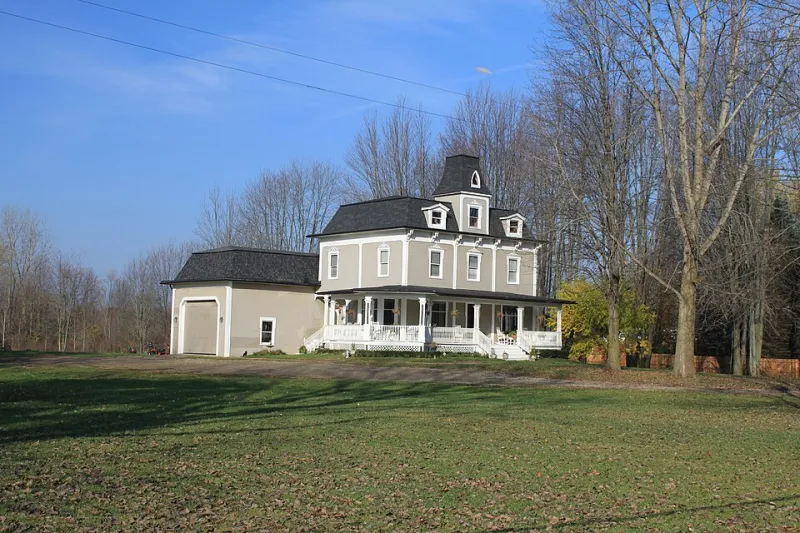
Photo: Dwight Burdette, CC BY 3.0, via Wikimedia Commons
There is a particular kind of honesty you only hear at a diner counter at 6:30 in the morning. It is not the polished kind that comes from a press release or a debate stage. It comes with coffee refills and a pause before someone decides whether to trust you with the truth about their lives.
That honesty is the entire premise of this campaign.
When K. Henry announced the pledge to visit all 83 Michigan counties before Election Day, skeptics called it a stunt. Eighty-three counties is a lot of asphalt, a lot of grain elevators, a lot of handshakes at county fairs. But the pledge was never about mileage. It was about a simple conviction: a representative who has not sat at Michigan kitchen tables has no business writing the rules that govern them.
The Road So Far
The tour began in Frankenmuth, where a third-generation bakery owner explained that rising commercial insurance premiums — not labor, not ingredients — were the line between another year in business and closing the doors her grandmother opened. Two weeks later, in the western Upper Peninsula, a logging contractor described watching young families leave for Wisconsin because childcare here costs more than a truck payment.
Different regions. Different industries. The same thread.
In Lenawee County, a soybean farmer talked about export uncertainty and the aging of rural road infrastructure. In Muskegon, dockworkers and small manufacturers described the gap between job postings and the skills training actually available. In Flint, a grandmother asked a question that has since been pinned above the campaign's headquarters: When Lansing writes a budget, who in that room has ever lived on it?
Each stop is logged on the campaign's county-by-county map — a living record of every community visited, every small business toured, every listening session held. It is not decoration. It is a receipt.
Feedback From the Road, Written Into the Platform
Here is what makes this tour different from the usual campaign swing: the Families First agenda is being revised because of it.
- The small business platform plank expanded to include commercial insurance reform after a dozen Main Street owners across three regions raised the same complaint independently.
- The rural investment section now prioritizes childcare access after Upper Peninsula parents made clear that jobs mean nothing without somewhere safe for their kids.
- The infrastructure commitments were reweighted toward county and township roads after county commissioners — Republicans and Democrats alike — walked K. Henry through crumbling culverts that state dashboards somehow rate as acceptable.
This is what it looks like when a platform is built from the ground up rather than handed down from a consultant's polling memo.
Why the Map Matters
Michigan is not one electorate. It is 83 distinct communities with distinct economies — cherry orchards and auto plants, college towns and copper country. A politics that flattens those differences into a single talking point has already failed before the first bill is filed.
The pledge to stand in every county is a discipline, not a photo op. It forces the campaign to answer hard questions in rooms that did not choose to be friendly. It means a farmer in Sanilac County and a nurse in Kalamazoo both get the same access, the same candor, and the same promise: your concerns do not stop at the county line.
The Promise Going Forward
The tour does not end at Election Day — that is the point. The same map that tracks the listening tour will track accountability afterward. Town halls by region. An open door in the district office. An annual report to every county on what was promised and what was delivered.
Michigan families do not need a representative who visits once every four years and disappears into Lansing. They need one who never stops listening. The road so far says this campaign means it.