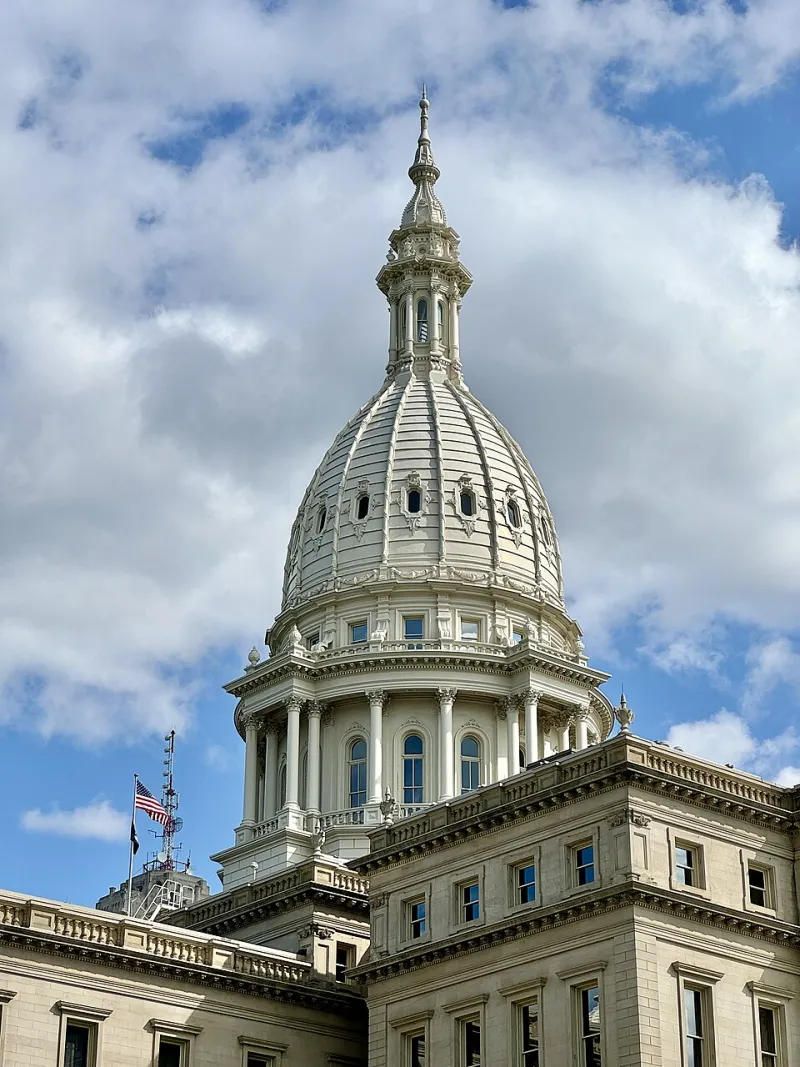
The Homework Problem Lansing Keeps Failing: Schools as Michigan's Real Economic Engine
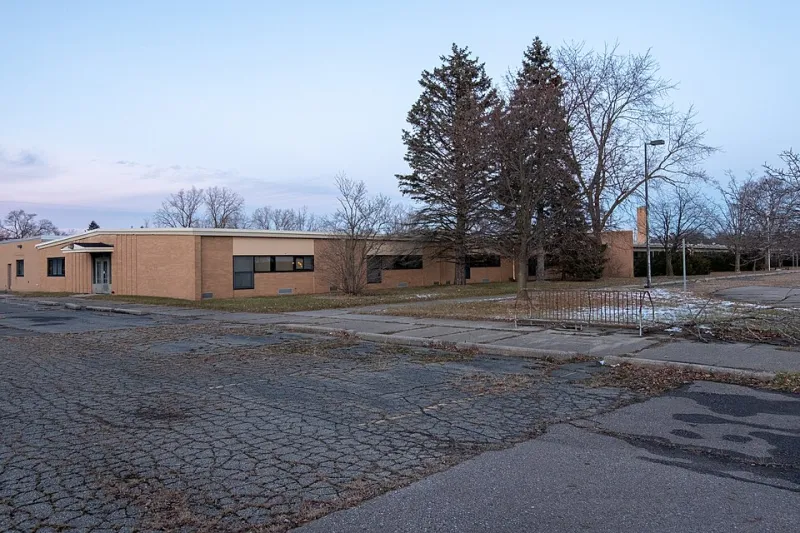
Photo: Gregory Varnum, CC BY-SA 4.0, via Wikimedia Commons
When site selectors for major employers visit Michigan, they rarely lead with tax abatements. They lead with a question that should make every legislator in Lansing uneasy: can I recruit people to move here, and will their kids get a good education?
For too long, Michigan has treated school funding as a social expense rather than the economic infrastructure it truly is. K. Henry's Families First Agenda flips that framing — and the difference matters for every household in this state.
The Recruiting Call That Ends Awkwardly
Talk to economic development officials across Michigan and a pattern emerges. Companies touring a new facility are impressed by the workforce, the logistics, the shuttered-but-ready industrial land. Then the HR director asks about the district attendance boundaries, and the room goes quiet.
In districts where buildings have deferred roof repairs for a decade and class sizes have crept past thirty, that silence costs the state jobs. Parents making relocation decisions pull up school data before they pull up housing prices. A state that underfunds its classrooms is, in effect, asking employers to recruit around its own neighborhoods.
Where the Shortage Meets the Payroll
The teacher shortage is not an abstraction in Michigan — it is a vacancy sign hanging over thousands of classrooms. Rural districts share special education instructors across county lines. Suburban schools staff classrooms with long-term substitutes. Veteran educators, priced out of the profession by stagnant pay and rising pension costs, are leaving mid-career for adjacent states that treat teaching as a profession worth funding.
Every unfilled position has a downstream cost. Parents leave the workforce to fill childcare gaps. Students lose instructional momentum that shows up years later in college remediation rates and workforce readiness. Employers inherit the gap and pay to close it with internal training programs.
K. Henry's proposal treats educator retention as economic policy: competitive starting salaries benchmarked to neighboring states, a state-funded pipeline that forgives loans for teachers who commit to high-need districts, and respect in the policy process — because no salary schedule fixes a profession that has been made the target of constant legislative second-guessing.
The Buildings Are Part of the Pitch
Michigan's school infrastructure deficit runs into the billions, and it falls hardest on districts with the smallest property tax bases — a structural unfairness that guarantees the zip code determines the learning environment.
The Families First Agenda includes a dedicated school facilities fund, prioritizing districts where buildings fail basic health and safety standards: ventilation that predates modern air-quality standards, heating systems held together by maintenance crews' ingenuity, water fountains replaced with bottled water stations.
A new advanced manufacturing plant means little to a family that just learned their child's science lab has no working gas lines. Fix the buildings, and Michigan's communities become places employers can honestly recommend.
The Budget Is a Values Statement
Every two-year state budget is a test of what Lansing actually believes. For decades, the answer has been tax carve-outs and incentive packages with questionable returns, while per-pupil funding lagged the regional average.
K. Henry's position is straightforward: Michigan should compete for families the way it competes for businesses — with a product worth choosing. That means fully funding the foundation allowance, closing the funding gap between the wealthiest and poorest districts, and expanding pre-K access so that the readiness gap never opens in the first place.
An Investment With a Measurable Return
Economists who study state-level education spending consistently find what Michigan families already know intuitively: every dollar in the classroom returns more than a dollar in future earnings, tax revenue, and reduced social costs. The state's own past proves it — the generations educated in well-funded Michigan schools built the auto industry's middle class and the university system's global reputation.
The choice before voters this fall is not whether Michigan can afford to invest in its schools. It is whether Michigan can afford not to. K. Henry's answer, and the Families First Agenda's founding premise, is that the classroom is the state's front door — and it is time Michigan made it a door worth walking through.